
Bilingual Education: Raising Children in English and French

Bilingual Education: Raising Children in English and French

Many parents in Kigali want their children to grow up confident in more than one language. English opens doors across East Africa and the wider world, and French connects children to a large international community. But “bilingual school” can mean very different things from one school to the next. How are the two languages actually used? When does each one take the lead? And what do children have to show for it?

This guide explains how bilingual education works at Agasaro International Academy (AIA), step by step, from Nursery to A Level.

In this guide, you will learn:

  • What bilingual education means at Agasaro
  • Why the school chose English and French
  • How the approach changes from Nursery to Secondary
  • How the Cambridge curriculum and French programmes work together
  • What DELF and DALF qualifications are, and how students earn them
  • How the school supports children who need extra help with reading and writing
  • What bilingual learning looks like beyond the classroom
  • How to take the next step
  • Frequently asked questions

What Bilingual Education Means at Agasaro

Agasaro International Academy is a blended bilingual international school in Nyanza, Kicukiro, Kigali. Its aim is stated clearly: to develop strong written and oral communication skills in both French and English, so children can read, write, listen and speak confidently in each.

The school was founded on the belief that Rwanda’s rapid development means future generations will need strong communication skills alongside academic qualifications. Bilingual education is not an add-on at Agasaro. It is part of the school’s purpose.

Why English and French?

Rwanda is a multilingual country with four official languages: Kinyarwanda, English, French and Kiswahili. English is the main language of instruction in Rwandan schools and the language of regional business. French remains an official language, and Rwanda belongs to both the Commonwealth and the Organisation internationale de la Francophonie.

For a child growing up here, English and French together offer a rare advantage: access to the English-speaking world and the French-speaking world, with Kinyarwanda keeping them connected to home and culture.

How the Approach Changes as Your Child Grows

Agasaro uses a clear progression. French is emphasised in the early years, and English takes over as the main language of instruction as children advance, while French continues alongside it.

Stage Language focus What children do
Nursery (Discover & Grow) French language introduced through play Early learning, creativity, communication, social and emotional development, AI and robotics, activities such as swimming and karate
Primary, Nursery and Grades 1–3 French emphasised A bilingual experience built on Cambridge Primary, with English and French, mathematics, science, reading and communication
Primary, from Grade 4 English becomes the main language of instruction; French continues Cambridge Primary learning with ongoing French development
Secondary (Lead & Achieve) Confident communication in English and French A Cambridge pathway toward IGCSE, AS and A Level, with French taught as a subject alongside Kinyarwanda and Kiswahili

In plain words: young children start with a natural, early immersion in French. As they build confidence and reading skills, English becomes the primary language of the classroom, and French stays a living part of their education.

Cambridge and French, Working Together

Bilingual education at Agasaro is built on two strong foundations.

The Cambridge curriculum. Agasaro is a Cambridge-accredited school and a Cambridge examination centre. The Cambridge programme develops academic knowledge, critical thinking, creativity, communication and problem-solving. Because students sit their Cambridge exams on their own campus, the experience is familiar and calm.

The French programmes. Alongside Cambridge, Agasaro’s DELF and DALF programmes help students progressively build their French listening, speaking, reading and writing skills while preparing for internationally recognised qualifications.

Together, the school says, these programmes support strong English–French bilingualism and academic excellence. The aim is a student who can do their schoolwork in English, communicate comfortably in French, and carry both languages into university and beyond.

DELF and DALF: Proof of Your Child’s French

Many schools teach French. Fewer help students earn official certificates for it. At Agasaro, the French programme leads to the DELF (Diplôme d’études en langue française) and DALF (Diplôme approfondi de langue française), diplomas issued by the French Ministry of Education.

Here is what makes them valuable:

  • They are recognised internationally and valid for life.
  • They follow the Common European Framework of Reference for Languages (CEFR), with six levels from A1 (beginner) to C2 (mastery). DELF covers A1 to B2, and DALF covers C1 and C2.
  • DELF Prim is designed for primary-age children, and DELF Junior for teenagers.
  • The exams test listening, speaking, reading and writing.

Agasaro has signed an agreement with the French Institute of Rwanda to be an official centre for both DELF Prim and DELF Junior exams. In practice, your child can sit the exam in their own school, among familiar teachers and classmates.

The school’s partners reflect this commitment: Cambridge Assessment International Education, France Éducation international and the Embassy of France in Rwanda.

Reading and Writing Come First

Language learning depends on reading. Agasaro’s remedial (catch-up) programme helps learners read fluently, write well and improve across all subjects. It is guided by a simple principle: a child who reads will be an adult who thinks. For a bilingual child, strong reading skills in one language support learning in the other, so extra help early on can make a lasting difference.

Bilingual Learning Beyond the Classroom

Languages grow when children use them for real. At Agasaro, students can join:

  • Debate and Creative Writing, where they practise expressing ideas clearly
  • Journalism and Media, where they write and present
  • Cultural activities, traditional and modern dance, which connect language to culture
  • Competitions, interactive sessions and exchange programmes at national and international level, where they meet people beyond Kigali

Students also learn coding, robotics and AI from the early years, so they build modern skills while learning in two languages.

Is This Approach Right for Your Child?

Agasaro’s bilingual programme may suit your family if:

  • you want your child to be confident in both English and French
  • you value official French qualifications with lifelong validity
  • you want a Cambridge pathway through to IGCSE, AS and A Level
  • you prefer a gradual path in which French comes first in the early years and English leads from Grade 4

A good fit also means asking questions. On your visit, consider:

  • How are French and English used in a typical day in my child’s class?
  • How does the move to English-led teaching in Grade 4 work?
  • How will my child’s French be assessed?
  • What support is available if my child needs extra help?

Take the Next Step

The best way to see bilingual education at Agasaro is to visit. Walk through the classrooms, meet the teachers and ask every question you have.

  1. Enquire: Call +250 790 135 575 or +250 788 230 809, or email principal@agasarointernational.com.
  2. Visit: Book a school visit and see the learning environment first-hand.
  3. Check the fees: View all fee information on the School Fees page.
  4. Apply: Read the admissions process and complete the online application form.

New students from Nursery 2 upward sit a short entry test, and results are shared within 24 hours, together with feedback on your child’s strengths and areas to improve.

Frequently Asked Questions

Is Agasaro International Academy a bilingual school?
Yes. It offers bilingual education in English and French, with French emphasised in Nursery and Grades 1 to 3 and English becoming the main language of instruction from Grade 4.

Which languages are taught?
English and French are central. Kinyarwanda and Kiswahili are also taught as subjects at secondary level.

What curriculum does the school follow?
The Cambridge International curriculum, with a pathway to IGCSE, AS and A Level.

What are DELF and DALF?
Official French-language diplomas issued by the French Ministry of Education. They follow the CEFR levels and are valid for life.

Can my child take French exams at school?
Yes. Through an agreement with the French Institute of Rwanda, Agasaro is a centre for the DELF Prim and DELF Junior exams.

Does my child need to speak French before joining?
Admission for new students from Nursery 2 upward includes a short entry test based on the basic skills expected for their class. Speak to the admissions team about your child’s situation.

Where can I find the school fees?
On the School Fees page.
Cambridge Education in Rwanda: What Parents Need to Know about this program

Cambridge Education in Rwanda: What Parents Need to Know about this program

Cambridge Education in Rwanda: What Parents Need to Know About This Programme

If you have been exploring schools in Kigali, you have probably noticed the word “Cambridge” on school websites, brochures and fee pages. But what does it actually mean for your child? Is it just a name, or a different way of learning?

Cambridge education in Rwanda is an international programme offered by a growing number of schools. It follows a clear, step-by-step pathway from early primary school to the final years of secondary school, with internationally recognised qualifications along the way. This guide explains the programme in plain language, so you can decide whether it suits your child and your family’s plans.

In this guide, you will learn:

  • What Cambridge education is and who is behind it
  • The four stages of the Cambridge pathway and the ages they cover
  • What children study at each stage
  • How Cambridge exams and qualifications work (Checkpoint, IGCSE, AS and A Level)
  • How Cambridge compares with the Rwandan national curriculum
  • The benefits and the things to consider
  • How to know if Cambridge is right for your child
  • Frequently asked questions
  • How to take the next step

What Is Cambridge Education?

Cambridge education is an international curriculum and qualification system run by Cambridge University Press & Assessment, which is part of the University of Cambridge. Its international arm, Cambridge Assessment International Education, serves schools around the world. Schools that offer the programme follow Cambridge syllabuses and prepare students for Cambridge assessments.

In simple terms, it is a structured learning journey for students aged 5 to 19, designed to build knowledge, critical thinking, communication and problem-solving skills, not just memorisation.

The Cambridge Pathway: Four Stages for Ages 5 to 19

The programme is called the Cambridge Pathway. It has four stages, and each prepares students for the next. Schools can offer all the stages or only some.

Stage

Typical age

Duration

What it leads to

Cambridge Primary

5–11

6 years

Optional Primary Checkpoint tests

Cambridge Lower Secondary

11–14

3 years

Optional Lower Secondary Checkpoint tests

Cambridge Upper Secondary

14–16

2 years

Cambridge IGCSE qualifications

Cambridge Advanced

16–19

1 to 2 years

Cambridge International AS & A Level qualifications

Cambridge Primary (ages 5 to 11)

This stage builds strong foundations in English, mathematics and science, alongside subjects such as Global Perspectives, digital literacy, art and music. Learning is designed to encourage curiosity, questions and confidence.

Cambridge Lower Secondary (ages 11 to 14)

Students carry everything from primary into deeper study. This is the bridge year group, where learners get ready for the more demanding qualification stage ahead.

Cambridge Upper Secondary (ages 14 to 16)

Students prepare for the International General Certificate of Secondary Education (IGCSE). It is subject-based, so students choose subjects and are graded in each one separately.

Cambridge Advanced (ages 16 to 19)

Students work toward Cambridge International AS Level and A Level qualifications. The AS (Advanced Subsidiary) Level typically takes one year and is half of a full A Level, which typically takes two years. There are no compulsory subjects, so students can build a combination that matches their goals.

How Cambridge Assessment Works

Cambridge is not only about the final exam. There are checkpoints along the way:

  • Cambridge Checkpoint tests are optional tests at the end of Primary and Lower Secondary. They are marked by Cambridge and give an external, international benchmark of a student’s progress in English, mathematics and science. They are diagnostic, meaning they show strengths and gaps rather than awarding a final grade.
  • IGCSE is the first formal, graded qualification, taken at around age 16.
  • AS and A Level are the advanced qualifications, taken at the end of secondary school and widely used for university applications.

Schools can choose whether students sit exams at each stage, so it is worth asking any school how they use Checkpoint results.

Is Cambridge Recognised Around the World?

Yes, this is one of the main reasons parents choose it. Independent benchmarking by the UK’s recognition agency (UK NARIC, now Ecctis) found Cambridge IGCSE comparable to the UK GCSE and Cambridge International AS & A Level comparable to the UK A Level. Universities around the world accept these qualifications.

If your child plans to study in Rwanda or elsewhere in Africa, it is wise to check the specific entry and equivalence requirements of the university or country you have in mind well in advance, because rules differ between institutions.

Cambridge vs the Rwandan National Curriculum

Rwanda’s national schools follow the Competence-Based Curriculum (CBC), introduced by the Rwanda Education Board (REB). Many Rwandan parents ask how the two compare. Neither is simply “better”. They are designed for different purposes.

Cambridge

National curriculum (CBC)

Origin

International

Rwandan

Qualifications

IGCSE, AS and A Level

National examinations

Strength

Global recognition, portability between international schools

Local grounding and national pathway

Transfer

Students can continue the same curriculum if they move between Cambridge schools, including abroad

Designed for Rwanda’s system

Some parents choose Cambridge because it is portable. A child who moves cities or countries can often continue the same programme. Others prefer the national pathway for its local focus. The right choice depends on your child’s future plans, which is why a conversation with the school is worth having.

Benefits of Cambridge Education for Your Child

  • A clear path from age 5 to 19, so learning builds step by step.
  • Skills, not just facts: critical thinking, problem-solving, research and presentation.
  • Internationally recognised qualifications that open doors to universities and careers worldwide.
  • A global outlook, with subjects like Global Perspectives that connect learning to the wider world.
  • Language strength: English is the main language of instruction, which supports study at international universities.
  • Consistent standards, because exams are set and marked to an international benchmark.

Things to Consider Before Choosing

A balanced decision means looking at the whole picture:

  • Language: Cambridge learning is delivered in English. Ask how the school supports children who are still building their English, and how local languages such as Kinyarwanda are included.
  • Fees and extras: Cambridge exams, textbooks and materials usually cost extra. Ask for the full fee structure, including exam fees.
  • School quality: Not every school delivers the programme equally well. Ask whether the school is officially a Cambridge school and a Cambridge exam centre.
  • Fit for your child: The programme is rigorous. Ask about learning support for students who need extra help.

Is Cambridge Right for My Child?

Cambridge may be a strong fit if:

  • you want your child to be ready for study at universities in Rwanda or abroad
  • you value critical thinking and communication as much as exam results
  • your family may relocate and you want continuity in your child’s education
  • you want your child to grow up confident in more than one language

Cambridge Education at Agasaro International Academy

At Agasaro International Academy, Cambridge is the foundation of the learning programme in Kicukiro, Kigali. The school is a Cambridge-accredited school and a Cambridge examination centre, so students sit their exams on their own campus. It works with Cambridge Assessment International Education as an official partner and offers a pathway from primary through IGCSE, AS and A Level.

What makes Agasaro different is the combination:

  • English–French bilingual learning, with French emphasised in the early years and English becoming the main language of instruction from Grade 4
  • DELF and DALF French pathways (the Diplôme d’études en langue française and the Diplôme approfondi de langue française), with the school as a DELF Prim and DELF Junior exam centre
  • Coding, robotics and AI introduced from the early years
  • A wide range of clubs, sports and activities, plus school meals and bus routes across Kigali

Take the Next Step

The best way to understand Cambridge education is to see it in action. Visit Agasaro International Academy, meet the teachers, tour the classrooms and ask every question on your list. Here is how to begin:

  1. Enquire: Call +250 790 135 575 or +250 788 230 809, or email principal@agasarointernational.com.
  2. Visit: Book a school visit and see learning in action.
  3. Check the fees: See the full fee structure on the School Fees page.
  4. Apply: Read the admissions process and complete the online registration form.

Your child’s place for the current academic year is waiting. The sooner you visit, the easier it is to plan.

Frequently Asked Questions

What is Cambridge education?
It is an international programme for students aged 5 to 19, delivered through four stages: Primary, Lower Secondary, Upper Secondary (IGCSE) and Advanced (AS and A Level).

What does IGCSE stand for?
International General Certificate of Secondary Education. It is the graded qualification taken at around age 16.

What is the difference between AS Level and A Level?
The AS Level is typically one year and covers half of a full A Level. The A Level typically takes two years.

Are Cambridge Checkpoint tests compulsory?
No. They are optional, and schools choose whether to enter students.

Is Cambridge recognised by universities?
Yes. Cambridge IGCSE and AS & A Level are widely accepted around the world. Always confirm the specific requirements of the university you are considering.

Is Cambridge taught in English?
Cambridge syllabuses are in English. At a bilingual school like Agasaro, French is also developed throughout.

Can my child start Cambridge in the middle of primary school?
Admission depends on the school. At Agasaro, new students from Nursery 2 upward sit a short entry test, and results are shared within 24 hours.

Where can I find Agasaro’s school fees?
On the School Fees page.
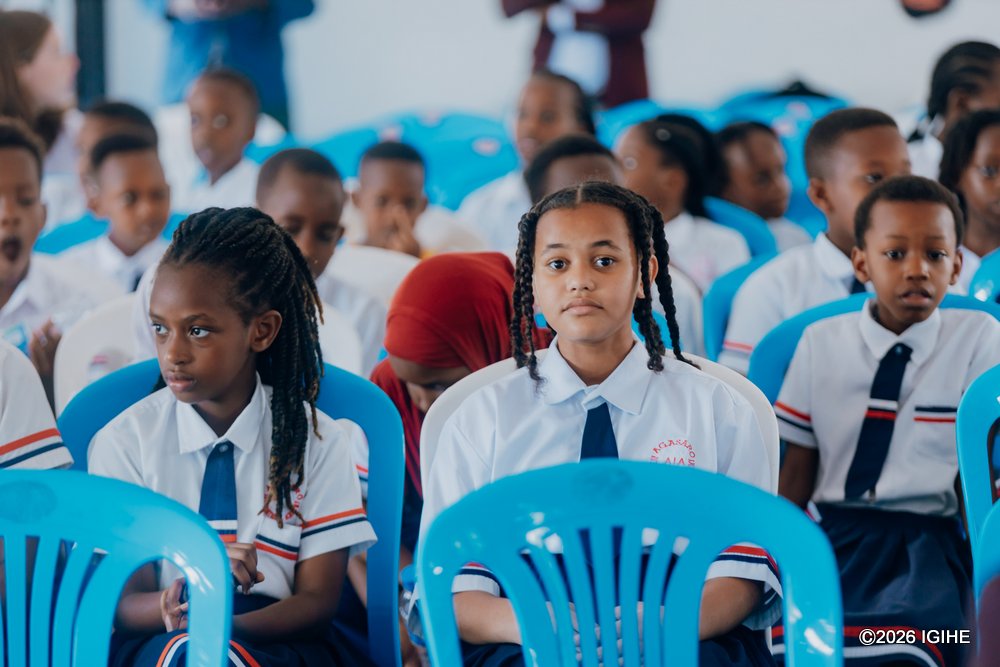
Agasaro International Academy: What you need to know about this school

Agasaro International Academy: What you need to know about this school

Choosing a school is one of the most important decisions you will make for your child. Kigali offers many options, but few combine a Cambridge curriculum with English- and French-language bilingual learning and early coding, robotics, and artificial intelligence (AI) education. Agasaro International Academy (AIA) brings all three together.

This guide covers what parents most often ask about the school.

In this guide, you will learn about:

  • What Agasaro International Academy is and where it is located
  • The school’s vision and mission
  • Agasaro at a glance: key facts and figures
  • The Cambridge curriculum and the school’s international partners
  • English–French bilingual education
  • What your child will learn in Nursery, Primary and Secondary
  • Coding, robotics and AI
  • Extra learning support through the remedial programme
  • Clubs, sports and life beyond the classroom
  • School meals and transport
  • How to apply, including the entry test
  • School fees
  • Whether Agasaro is the right fit, questions to ask on a visit, and frequently asked questions

What Is Agasaro International Academy?

Agasaro International Academy is a Cambridge school and a blended bilingual (English and French) international school in Nyanza, Kicukiro, Kigali. It is non-denominational and welcomes children from Nursery to Secondary, with a pathway to the International General Certificate of Secondary Education (IGCSE) and to Advanced Subsidiary (AS) and Advanced (A) Level qualifications.

The school was founded on a simple belief: children do best when their wellbeing and a world-class education go hand in hand. It also reflects a clear vision for Rwanda’s future, where strong written and spoken communication matters as much as academic results.

Address: KK 116, 15 Rd, Nyanza, Kicukiro, Kigali, Rwanda


Cambridge Assessment International Education, France Edecucation International, and Delf dalf program

Vision and Mission

Agasaro aims to build a passionate, inspired community of students who keep growing intellectually, emotionally, socially and physically throughout their lives. To do this, it provides an international-standard learning environment through the Cambridge curriculum, modern teaching methods and highly skilled teachers.

Agasaro at a Glance

Year founded

2016

Certified teachers

40+

Graduated students

500+

Supporting staff

25+

Awards won

45+

Since opening its doors in 2016, the school has built a team of more than 40 certified teachers supported by over 25 staff members, and has collected more than 45 awards along the way.

A Cambridge Education for a Global Future

Agasaro follows the Cambridge International curriculum, a globally respected programme that builds knowledge, critical thinking, creativity, communication and problem-solving. It is a Cambridge-accredited school and a Cambridge examination centre, so students sit their exams on their own campus in familiar surroundings.

For parents searching for a Cambridge school in Kigali, this means a structured route from the early years through IGCSE and on to AS and A Level.

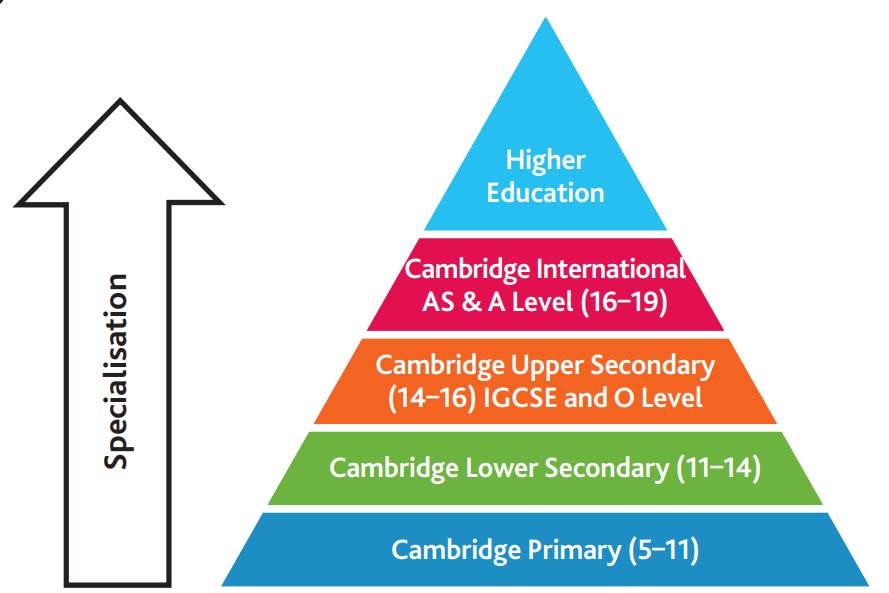
Cambridge qualifications pyramid Image title: Cambridge qualifications pyramid

Our International Partners

Agasaro works with respected international organisations:

  • Cambridge Assessment International Education
  • France Éducation international
  • Ambassade de France au Rwanda (the French Embassy in Rwanda)

A Truly Bilingual School: English and French

Language is where Agasaro stands out. Children grow up learning in both English and French:

  • Early years to Grade 3: French is emphasised in Nursery and Grades 1 to 3, giving young learners a natural head start in a second language.
  • From Grade 4: English becomes the main language of instruction, while French continues to develop alongside it.
  • French qualifications: Students can follow the DELF (Diplôme d’études en langue française) and DALF (Diplôme approfondi de langue française) pathways. Agasaro is a centre for the DELF Prim and DELF Junior exams through an agreement with the French Institute of Rwanda.

The result is a child who can read, write, and speak with confidence in two international languages. At secondary level, Kinyarwanda and Kiswahili are also taught as subjects.

What Will Your Child Learn?

Nursery: Discover & Grow

A caring, stimulating start to school life. Children develop communication skills, creativity, and social and emotional confidence through play. French, AI and robotics, and activities such as swimming and karate are part of the early years.

Primary: Learn & Explore

A bilingual experience built on Cambridge Primary. Children study English and French, mathematics and science, reading, arts and creativity, with digital learning, coding and robotics. Co-curricular options include swimming, karate, traditional dance, clubs and abacus/mental maths.

Secondary: Lead & Achieve

A holistic Cambridge pathway toward IGCSE, AS and A Level. Students study a broad range of subjects, including:

  • Mathematics and English
  • Physics, Biology and Chemistry
  • Geography and Business Studies
  • Literature in English
  • French, Kinyarwanda and Kiswahili
  • Art and Music
  • Global Perspectives
  • Information and communication technology (ICT), AI and Robotics

Coding, Robotics and AI From Day One

Technology is built into the school day, not added on. Students at every level take part in age-appropriate coding and robotics activities, and AI and robotics are introduced progressively from Nursery through Secondary. These lessons build creativity, logical thinking and problem-solving, skills that serve children well whatever career they choose. The school also encourages interest in STEM (science, technology, engineering and mathematics) through activities inside and outside the classroom.

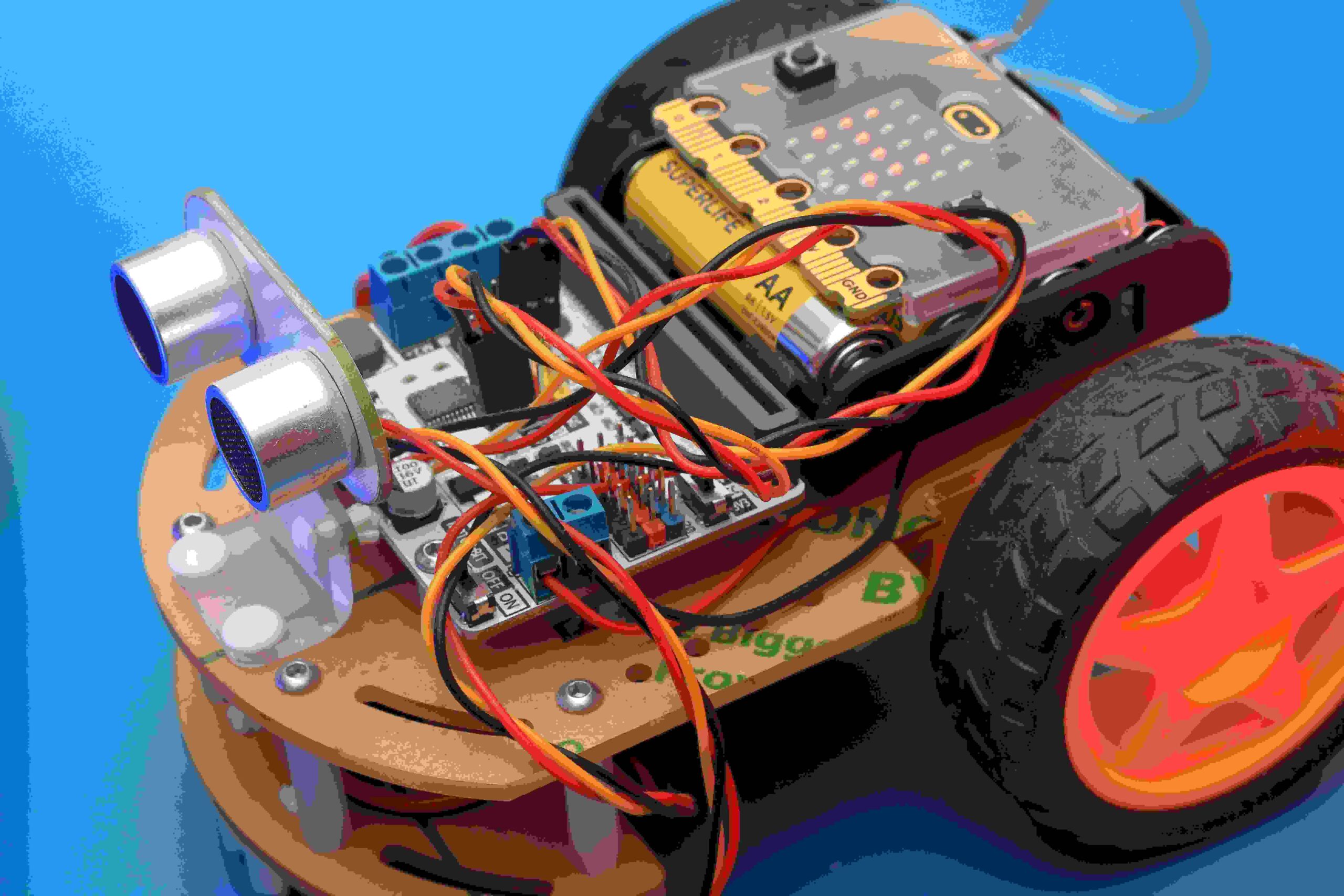
Robotics at Agasaro International Academy

Extra Help When It’s Needed

Every child learns at their own pace. Agasaro’s remedial (catch-up) programme helps learners read fluently, write well and improve across all subjects. The guiding principle: a child who reads will be an adult who thinks.

Life Beyond the Classroom

School should be about more than exams. Agasaro offers a wide range of clubs and co-curricular activities:

  • Academic clubs: Mathematics (abacus and mental maths), Debate, Creative Writing, Journalism and Media
  • Arts and culture: Modern dance, traditional dance and cultural activities
  • Sports and wellbeing: Karate, swimming, indoor and outdoor games
  • Leadership and global experiences: Competitions, interactive sessions and exchange programmes
  • Personal development: Career Week, summer camp and hobbies
  • Innovation and exploration: Exhibitions, STEM activities and educational trips
  • Environment: An Environmental and Tourism Club with nature walks, clean-up campaigns and conservation projects

These activities help children build confidence, teamwork, creativity and leadership.

School Meals and Transport

Meals: Breakfast and lunch are part of the school day, so there is no lunchbox to prepare each morning.

Transport: The school currently runs five buses on five routes across Kigali and surrounding areas:

Route Areas served
Route 1 Remera, Kimironko, Zindiro, Gacuriro, Karuruma
Route 2 Gahanga, Kanzenze, Bugesera
Route 3 Kabeza, Kanombe, Nyarugenge (Downtown)
Route 4 Rebero, Karembure
Route 5 Gatenga, Gikondo, Nyamirambo

For availability on your route, call the school bus coordinator on +250 788 670 434.

How to Apply

Joining Agasaro takes three steps: Enquire, Visit, Apply.

  1. Enquire: Contact the admissions team with your questions about programmes, requirements and available places.
  2. Visit: Tour the campus, meet the team and see the learning environment first-hand.
  3. Apply: Complete the online registration form or ask the registrar to assist you in the registration process at school.

Entry test: New students from Nursery 2 through secondary sit a short entry test based on the basic skills expected for their class. Results are shared within 24 hours, together with feedback on your child’s strengths and areas to improve, so you can make a decision quickly.

School Fees

Fees depend on your child’s grade, and the school updates them each academic year. For the complete and current fee structure, including what is covered, additional costs such as exams, materials and transport, and payment methods, visit the official School Fees page.

It is also worth asking the admissions team about any discounts available to families.

Is Agasaro the Right School for Your Child?

Agasaro may be a great fit if you are looking for:

  • a Cambridge education from the early years to IGCSE and A Level
  • genuine English–French bilingual learning with DELF and DALF options
  • AI, coding and robotics as part of everyday learning
  • meals, clubs and transport arranged through one school
  • a Kicukiro-based school with bus routes across Kigali

Questions to Ask When You Visit

A campus visit is the best way to decide. Consider asking:

  • How many children are in my child’s class?
  • How does the move from French-emphasised to English-led teaching in Grade 4 work in practice?
  • Is there a bus route near our home?
  • What are the latest exam results and progression options after IGCSE?

Frequently Asked Questions

Is Agasaro International Academy a bilingual school?
Yes. Learning takes place in English and French. French is emphasised from Nursery to Grade 3, and English becomes the main language of instruction from Grade 4.

What curriculum does Agasaro follow?
The Cambridge International curriculum.

When was Agasaro International Academy founded?
In 2016.

Where is the school located?
KK 116, 15 Rd, Nyanza, Kicukiro, Kigali, Rwanda.

Can I visit before applying?
Yes. Parents are encouraged to tour the campus and meet the team.

Does Agasaro offer extracurricular activities?
Yes, including debate, journalism, creative writing, dance, karate, swimming, STEM activities and more.

Where can I find the school fees?
On the School Fees page of the school’s website.

Take the Next Step

Ready to find out whether Agasaro is right for your family? Visit the campus, meet the team and see the school for yourself.

  • Phone: +250 790 135 575 / +250 788 230 809
  • Email: principal@agasarointernational.com
  • Address: KK 116, 15 Rd, Nyanza, Kicukiro, Kigali

Share with